EPCG scheme: zero-duty capital goods and the export obligation
The EPCG scheme lets you import capital goods at zero customs duty to make goods or services. In return, you export six times the duties, taxes and cess saved within six years, and keep up your average exports. Buying the machinery in India, among other cases, lowers the obligation.
Published and updated
What is the EPCG scheme?
The Export Promotion Capital Goods (EPCG) scheme is a DGFT scheme that lets you import capital goods for pre-production, production and post-production at zero customs duty (FTP 5.01(a)). Imports for physical exports are also exempt from IGST and compensation cess. Goods on the negative list in Appendix 5F are left out.
Under EPCG, capital goods also include spares, molds, dies, jigs, fixtures, tools and refractories, built-in computer systems and software, and catalysts for two charges (FTP 5.01(a)).
Paragraph numbers are from Chapter 5 of the Foreign Trade Policy 2023, opens in a new tab (FTP) and of DGFT's Handbook of Procedures, opens in a new tab (HBP), or Chapter 11 where they start with 11. See DGFT's own page on the scheme, opens in a new tab and our guide to DGFT and India's foreign trade rules.
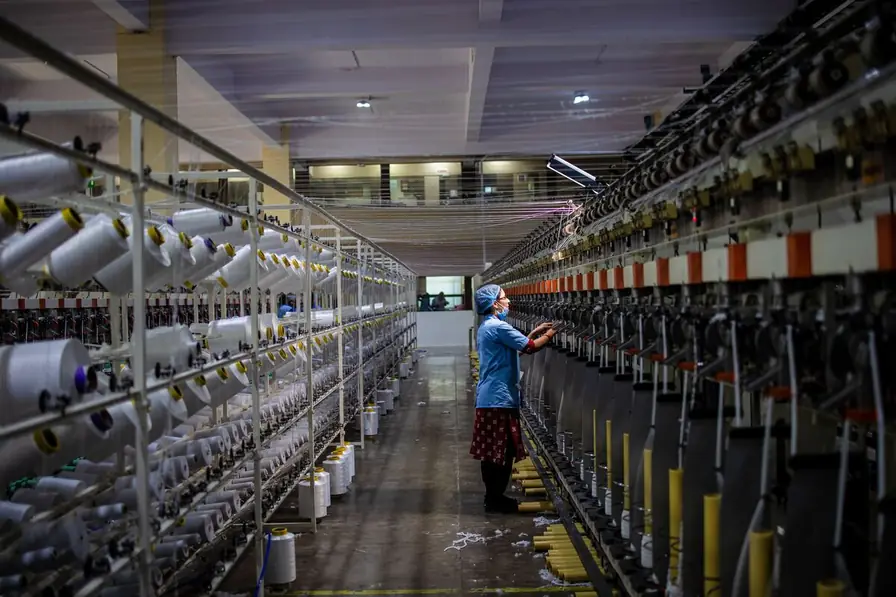
Who can use EPCG?
Manufacturer exporters can use EPCG, and so can merchant exporters tied to a supporting manufacturer, and service providers (FTP 5.02(a)). A supporting manufacturer is the one whose factory holds the capital goods (11.59(b)). Its name must be on the authorization before the goods are installed there.
You apply to your Regional Authority in form ANF 5A, with an independent Chartered Engineer's certificate tying the machines to your export product (HBP 5.02 and 5.03(a)).
How big is the export obligation?
The EPCG export obligation is six times the duties, taxes and cess saved on the capital goods, met within six years of issue (FTP 5.01(b)). On top of this specific obligation, you keep up your average exports of the same and similar products from the three preceding licensing years, each financial year (5.04(c)).
For example, capital goods that save ₹50 lakh in duties carry a specific obligation of ₹3 crore in exports over six years, counting only exports above your average (FTP 5.01(b) and 5.04(c)).
At least 50% of the specific obligation is due in years one to four, the rest in years five and six (HBP 5.13(a)). For extensions and closing, see the export obligation discharge certificate (EODC) and extensions.
Can the export obligation be reduced?
Yes: buying the capital goods in India cuts the specific obligation by 25%. Green technology exporters carry 75% of it, and units in the North East, Jammu and Kashmir and Ladakh 25%. Meeting 75% of it, and the average, in half the time waives the rest. Only one of these four applies (FTP 5.04(l)).
| Case | What changes | Paragraph |
|---|---|---|
| Indigenous sourcing: you buy the capital goods in India | Obligation 4.5 times the notional duty saved, not 6; average unchanged | FTP 5.04(d) and 5.08 |
| You export green technology products (13 kinds, such as solar and wind energy systems) | Obligation 4.5 times the duty saved, not 6; average unchanged | FTP 5.10; HBP 5.26 |
| Your factory is in one of the eight North Eastern states, Jammu and Kashmir or Ladakh | Obligation 1.5 times the duty saved, not 6; average unchanged | FTP 5.11 |
| You meet 75% or more of it, and all the average due, in half the period or less | The rest is waived | FTP 5.09 |
| You import less than the authorization's duty saved amount | The obligation falls in proportion | HBP 5.15(c) |
| You export from one of 13 sectors, among them handicrafts, handlooms, agriculture, fisheries, carpets, coir and jute | No average obligation, except on fishing trawlers, boats and ships | FTP 5.12(a) and (b) |
| India's total exports of your sector or product group fell more than 5% in a year | That year's average can be cut in proportion | HBP 5.17(a) |
In those sectors, capital goods other than tools can't be transferred for five years from import, even once the obligation is met (FTP 5.12(c)).
Is the average export obligation cut for 2024-25?
Yes, for product groups whose exports fell more than 5% in 2024-25 against 2023-24 (HBP 5.17(a)). DGFT's Policy Circular 10/2025-26 of February 26, 2026 lists them. It asks Regional Authorities to re-fix the 2024-25 average export obligation of EPCG authorizations in proportion to the fall (paras 1 to 3).
The circular's annex, opens in a new tab lists 361 product groups by four-digit HS code. India's exports of HS 8430, earth-moving and boring machinery, fell 39.69%, from US$ 384.66 million to US$ 231.97 million (S. No. 290).
The Regional Authority records the cut on an amendment sheet issued to you (para 3). If you fall short, it must also weigh earlier circulars of this kind before a demand notice or an EODC (para 4).
Which exports count toward the export obligation?
Exports of the goods or services named on the authorization count, made by you or your supporting manufacturer, directly or through a third party (FTP 5.04(a) and (b)). So do deemed exports and exports under Advance Authorization, DFIA, drawback, RoSCTL and RoDTEP (5.04(e) and (f)). Only Domestic Tariff Area units' exports count (5.04(g)).
- Domestic Tariff Area means India outside SEZs, export-oriented units and technology parks (FTP 11.16, opens in a new tab).
- Supplies to SEZ units and developers count; an SEZ unit pays from its foreign currency account (HBP 5.11).
- Exports through a third party count if its shipping bills name you and the authorization, and it pays you through a bank (HBP 5.10).
See our guides to the Advance Authorization scheme and the RoDTEP scheme.
How long do you have to import, and what about restricted capital goods?
You have 24 months from the date of issue to import, with no revalidation (FTP 5.01(d)). Restricted capital goods need the approval of the EXIM Facilitation Committee at DGFT headquarters first (5.01(f)). The goods carry an actual user condition until you meet the obligation and get the EODC (5.03).
Actual user means you use the goods in your own premises (FTP 11.03), or under EPCG your supporting manufacturer's (5.02(a)).
Used machinery has its own rules; see how to import second-hand machinery into India.
Who certifies installation, and by when?
Within three years of completing the imports, you file an installation certificate from the jurisdictional Customs authority or an independent Chartered Engineer, your choice (HBP 5.04(a)). It confirms the capital goods are installed at your factory or your supporting manufacturer's. The Regional Authority may extend the deadline for ₹10,000 a year.
An extension can run up to the end of the obligation period. Moving the goods to another of your units needs a fresh certificate within six months (HBP 5.04(a)).
What does EPCG cost, and how long does DGFT take?
An EPCG application costs an MSME ₹100 for duty saved up to ₹1 crore, and ₹5,000 above. Others pay ₹1 per ₹1,000 of duty saved, from ₹500 to ₹1 lakh (Appendix 2K, item 3). DGFT's own norm for issuing one is 3 working days, or 1 on the automatic route (HBP 11.10).
| What you pay for | Fee | Source |
|---|---|---|
| Amendment | ₹200 | Appendix 2K, item 7 |
| Raising the authorization's value | ₹1 per ₹1,000 of added duty saved; nil if you paid the maximum | Appendix 2K, item 14 |
| More time for the installation certificate | ₹10,000 a year | HBP 5.04(a) |
Fees are from DGFT's copy of Appendix 2K, opens in a new tab, last changed May 14, 2025. A non-MSME hits the ₹1 lakh cap at ₹10 crore of duty saved. Older DGFT FAQs give one fee for everyone.
HBP 11.10, opens in a new tab counts those days from a complete application. They're DGFT's norms for its own offices, not a guarantee.
Can you give up an EPCG authorization?
Yes. You can surrender an unused EPCG authorization at any time, with no penalty or fee (HBP 5.21(a)). If you can't meet the obligation on one you've used, you pay the duties, taxes and cess on the shortfall, in proportion, with interest. You may also exit the scheme that way (5.21(b)).
A failed obligation can also bring action under the Foreign Trade (Development and Regulation) Act, 1992 and the Customs Act, 1962 (HBP 5.24).
How IndusDesk helps with EPCG
We watch the authorities, tell you what each change means for your products and plans, represent you while a decision is still open, and carry the work through, with every step on record in your workspace.
Frequently asked questions
Can you use EPCG for machinery bought in India?
Yes. The Regional Authority issues an invalidation letter or an Advance Release Order (HBP 5.09), and the Indian maker supplies you as a deemed export (FTP 5.07). Your specific obligation is 25% lower, reckoned on the notional duty saved (5.04(d) and 5.08).
What if you miss an EPCG block?
Miss the first block and you pay duty with interest on the shortfall within six months, unless it's extended for a fee (HBP 5.13(c)). Extending the whole period past six years costs ₹20,000 to ₹60,000 by duty saved, up to eight years from issue (HBP 5.16(b) and (c)); see EPCG extension fees.
How do you close an EPCG authorization?
Apply online for the EODC in form ANF 5B (HBP 5.20(a)). DGFT's own norm for closing it is 30 working days from a complete application (HBP 11.10). See closing an authorization and the EODC.
Sources
- Foreign Trade Policy 2023, Chapter 5 (compiled July 30, 2026), paras 5.01 to 5.04 and 5.07 to 5.12, opens in a new tab
- Handbook of Procedures 2023, Chapter 5 (compiled July 30, 2026), paras 5.02 to 5.04, 5.09 to 5.11, 5.13, 5.15 to 5.17, 5.20, 5.21, 5.24 and 5.26, opens in a new tab
- Foreign Trade Policy 2023, Chapter 11 (compiled July 30, 2026), paras 11.03, 11.16 and 11.59(b), opens in a new tab
- Handbook of Procedures 2023, Chapter 11, para 11.10, opens in a new tab
- Appendix 2K: Scale of Application Fee/User Charges (last changed May 14, 2025), items 3, 7 and 14, opens in a new tab
- Policy Circular 10/2025-26, dated February 26, 2026: relief in average export obligation for 2024-25 (HBP 5.17(a)), paras 1 to 4 and annex, opens in a new tab
- DGFT: the EPCG scheme's page on dgft.gov.in, opens in a new tab