DGFT: India's foreign trade rules, schemes and authorizations
DGFT is the Department of Commerce office that runs Foreign Trade Policy 2023 under the Foreign Trade (Development and Regulation) Act, 1992. It decides which goods are free, restricted or prohibited to import or export, and grants authorizations for restricted items. It also runs export schemes such as Advance Authorization, EPCG, RoDTEP and the Export Promotion Mission.
Published and updated
Where do DGFT's rules stand on October 28, 2026?
On October 28, 2026, Foreign Trade Policy 2023 is in force with no end date. RoDTEP and RoSCTL run until December 31, 2026, and the automatic export obligation extension ran out on August 31, 2026. Outside the Asian Clearing Union, export contracts and proceeds may be in any foreign currency or in rupees, with nine months to realize proceeds.
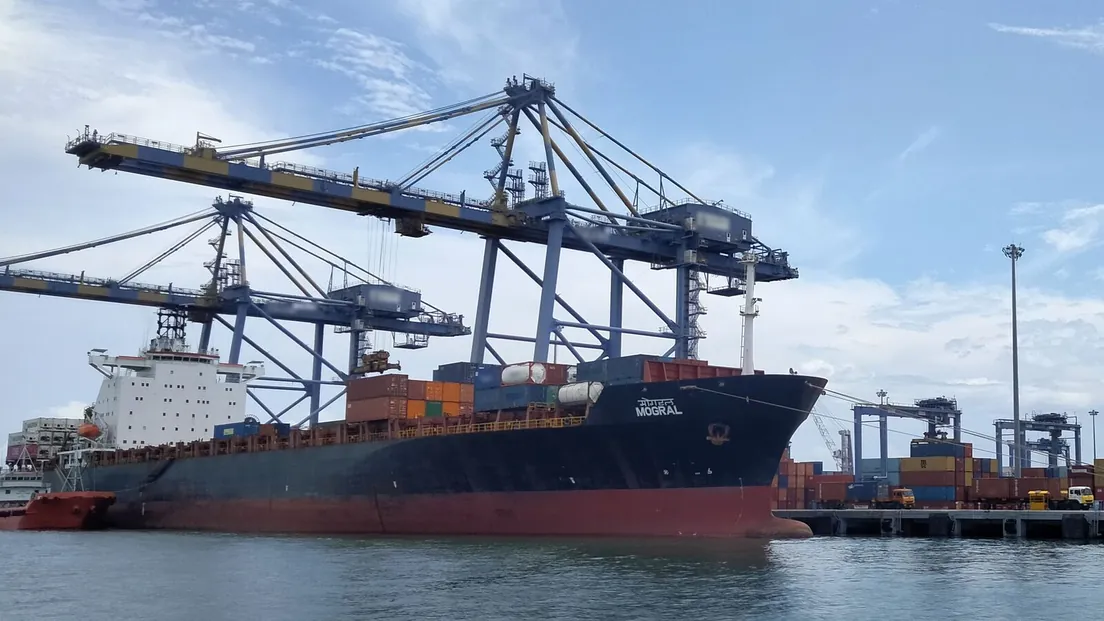
As of October 28, 2026
We read Foreign Trade Policy 2023, the Handbook of Procedures and the 2025-26 and 2026-27 notifications, public notices and trade notices they cite on October 28, 2026. Each line names its source.
- RoDTEP runs to December 31, 2026, at the rates and caps of September 30, 2026 (Notification 41/2026-27, opens in a new tab).
- RoSCTL on apparel, garments and made-ups runs to December 31, 2026 on its September 30, 2026 terms (Ministry of Textiles notification, opens in a new tab).
- The automatic extension of export obligations to August 31, 2026 has run out, so extensions now carry the normal fees (HBP 4.40, opens in a new tab(e), (f) and (l); HBP 5.13(f) and 5.16, opens in a new tab).
- Since August 20, 2026, export contracts and proceeds may be in any foreign currency or in rupees, except contracts with Asian Clearing Union members (Notification 30/2026-27, opens in a new tab).
- RBI cut the time to realize export proceeds from fifteen months to nine, from June 5, 2026 in its 2015 regulations and October 1, 2026 in its 2026 regulations (FEMA 23(R)/(8)/2026-RB, opens in a new tab; FEMA 23(R)/(1)/2026-RB, opens in a new tab).
- Since September 15, 2026, an export consignment up to ₹3,00,000 FOB needs no Registration-cum-Membership Certificate (RCMC) (Notification 36/2026-27, opens in a new tab, new para 2.57(c)).
- Since April 1, 2026, courier exports have no value limit per consignment. The limit had been ₹10,00,000 (Notification 67/2025-26, opens in a new tab).
- Since April 7, 2026, only DGFT-authorized agencies may issue certificates of origin, on trade.gov.in or another platform DGFT designates (Notification 05/2026-27, opens in a new tab; Public Notice 01/2026-27, opens in a new tab).
- Imports of goods made wholly or partly with forced labor are prohibited by Notification 23/2026-27, opens in a new tab of July 13, 2026 (new para 2.20B). Its English text applies the ban at once; its Hindi text, 30 days after Gazette publication.
- DGFT's Import Management System for restricted laptops, tablets and servers takes applications until December 15, 2026, and its authorizations end December 31, 2026 (Policy Circular 08/2025-26, opens in a new tab).
- Since October 21, 2026, metal scrap from the USA, the UK, Canada, New Zealand, Australia and the EU can enter through eleven named sea ports, up from eight, without a pre-shipment inspection certificate (Public Notice 35/2026-27, opens in a new tab). The exemption has conditions, such as a supplier's certificate of no radioactive material or explosives.
What is DGFT?
The Directorate General of Foreign Trade (DGFT) is the office in India's Department of Commerce that runs the Foreign Trade Policy. Its Director General advises the Central Government on the policy and is responsible for carrying it out, under section 6 of the Foreign Trade (Development and Regulation) Act, 1992.
Every import and export must follow the 1992 Act, opens in a new tab, its rules and orders, and the Policy in force (section 11(1), as the 2010 amendment, opens in a new tab rewrote it).
DGFT works through its headquarters in New Delhi and its Regional Authorities, opens in a new tab. The applicant's address decides which Regional Authority handles an application (HBP 2.04, opens in a new tab). DGFT's decision is final on how the Policy and the Handbook are read, and on ITC (HS) classification (FTP 2.58(a), opens in a new tab).
No Central or State agency may hold up an export consignment (FTP 1.08). Export stock may be seized only on prima facie evidence of serious irregularity, and the seizure should be lifted within 7 days unless the irregularity is proved (FTP 1.09).
What is the Foreign Trade Policy?
Foreign Trade Policy 2023 is the policy every import into India and export from India must follow. The Central Government notifies it under section 5 of the 1992 Act. It took effect on April 1, 2023 and has no end date. DGFT sets the procedures in the Handbook of Procedures.
The Central Government amends the Policy by notification in the Official Gazette. DGFT sets the Handbook, its appendices and forms by public notice (FTP 1.02 and 1.03, opens in a new tab; FTP 11.35 and 11.42, opens in a new tab). A specific rule in either beats a general one (FTP 1.04).
Before changing the Policy, the Central Government may ask importers, exporters and experts for views, giving 30 days where it can. It may also change it without asking (FTP 1.07(A)).
DGFT's compiled chapters, most dated July 30, 2026 on its site, lag some later notifications, so cite the notification where the two differ. Chapter 2 still prints currency rules that Notification 30/2026-27, opens in a new tab rewrote on August 20, 2026.
How do you deal with DGFT?
You deal with DGFT online, on dgft.gov.in. You file applications there, upload documents, answer DGFT's points and track each application's status. You sign with a digital signature certificate from an approved certifying authority or with Aadhaar e-sign. Documents should be in English or Hindi, or come with a self-certified translation.
1. Get an Importer-Exporter Code (IEC), opens in a new tab.
You need one to import or export goods unless you're exempt: a 10-character code that matches your PAN, which DGFT issues online (FT(D&R) Act, opens in a new tab, section 7; FTP 2.05, opens in a new tab).
2. File your application on dgft.gov.in.
Upload its documents in English or Hindi, or with a self-certified translation.
3. Sign it digitally.
Use a digital signature certificate from an approved certifying authority, or Aadhaar e-sign.
4. Answer DGFT's points.
Then track the application's status online.
- DGFT is bringing in rule-based, automated processing in phases, with risk-based checks (HBP 1.04(d), opens in a new tab).
- Documents DGFT issues online can be verified on its website (HBP 1.04(j)).
- No one can claim an authorization as a right. DGFT or a Regional Authority may refuse to grant or renew one (FTP 2.13, opens in a new tab).
Is your product free, restricted or prohibited?
Imports and exports are free unless the ITC (HS) schedules make an item prohibited, restricted or reserved for State Trading Enterprises. ITC (HS) sets import policy in Schedule I and export policy in Schedule II, at eight digits. A free item needs no authorization, a restricted one needs DGFT's, and a prohibited one can't be traded.
Find your eight-digit code in DGFT's ITC (HS) search, opens in a new tab. Schedule I covers new goods, and second-hand goods follow paragraph 2.31 (FTP 2.02, opens in a new tab). A free item may still carry conditions under other laws (FTP 2.01(b)).
| Status | What it means | What you need | Paragraph |
|---|---|---|---|
| Free | Import or export without a DGFT authorization | No DGFT authorization; policy conditions may apply | FTP 2.01 and 11.23 |
| Restricted | Moves only against an authorization or a procedure DGFT notifies | A DGFT authorization | FTP 2.08 and 11.48 |
| Prohibited | Can't be imported or exported | Not allowed under the Policy | FTP 11.41 |
| State Trading Enterprise | Only the State Trading Enterprise concerned may import or export it (Appendix 2J lists STEs) | DGFT's authorization, for anyone else | FTP 2.21(a) and (c) |
The policy on the date of import or export decides, and the bill of lading or shipping bill sets that date. A new restriction doesn't touch goods already imported or exported. Goods under an earlier irrevocable letter of credit, registered with the Regional Authority within 15 days, may still move within its balance. High-sea sales aren't covered (FTP 1.05(b), opens in a new tab).
DGFT may prohibit or restrict trade on grounds the Policy lists, such as health, essential security interests and obligations under the UN Charter (FTP 2.07). Goods made in or shipped from Pakistan are prohibited, even in transit (FTP 2.20A). So are goods made with forced labor, under Notification 23/2026-27, opens in a new tab of July 13, 2026.
What do you need to import a restricted item?
You import a restricted item against a DGFT import authorization, applying online to DGFT headquarters in form ANF 2M. DGFT may take the EXIM Facilitation Committee's advice and seek technical authorities' comments in writing. Only the actual user may import the goods unless DGFT waives that condition, and the authorization is normally valid for 18 months.
- Who decides: DGFT, or a Regional Authority it authorizes, grants the authorization, and may take the advice of the EXIM Facilitation Committee (HBP 2.48(a), opens in a new tab).
- Revalidation: DGFT headquarters may revalidate it on merits for six months from expiry (HBP 2.16(iii) and 2.20(a)).
- Fee: ₹1 for every ₹1,000 of CIF value, at least ₹500 and at most ₹1 lakh (Appendix 2K, opens in a new tab, as of its May 14, 2025 copy, item 4).
- IT hardware: laptops, tablets, all-in-one PCs and servers under HSN 8471 go through DGFT's Import Management System (Policy Circular 08/2025-26, opens in a new tab).
- Silver: bars under 71069221 and 71069229 have been restricted since May 16, 2026. From October 15, 2026, an application paying duty at the general rate can use a simpler procedure, except for silver dore, and gets an authorization valid six months with no extension (Notification 17/2026-27, opens in a new tab; Trade Notice 30/2026-27, opens in a new tab).
Can you import second-hand machinery?
Yes. Under paragraph 2.31 of the Foreign Trade Policy, most second-hand capital goods are free to import, with no age or residual-life condition. Second-hand desktop computers, air conditioners, diesel generating sets and refurbished PC and laptop spares are restricted. Refurbished capital goods spares need a Chartered Engineer's certificate of at least 80% residual life.
A foreign government report says second-hand capital goods need five years of residual life. Paragraph 2.31 sets no such condition (FTP 2.31, opens in a new tab, rows I(c) and I(d)).
What is a minimum import price?
A minimum import price is a floor on CIF value below which an item becomes restricted for import. Above the floor, it's free to import. Most minimum import prices DGFT set or extended in 2026 exempt imports by Advance Authorization holders, EOUs and SEZ units, as long as the goods aren't sold into the domestic market.
Our guide's table lists the ten floors, on eight products or groups, that DGFT set or extended in 2026 and our register holds, with floors and end dates. It isn't every minimum import price in ITC (HS). The floors on ATS-8 and sulfadiazine API end next, on November 30, 2026 (Notification 39/2026-27, opens in a new tab; Notification 40/2026-27, opens in a new tab).
What are the rules for exporting from India?
Any goods may be exported freely unless ITC (HS), the Foreign Trade Policy or another law regulates them. For a restricted export, you apply online to DGFT headquarters in form ANF 2N, and the EXIM Facilitation Committee considers it on merits. An export authorization outside SCOMET is normally valid for 24 months.
The application fee is ₹1,000 (Appendix 2K, opens in a new tab, as of its May 14, 2025 copy, item 2). Dual-use goods fall under SCOMET, where export is prohibited or needs an authorization (FTP 11.50, opens in a new tab).
- Wheat and wheat flour moved from prohibited to free on August 24, 2026 (Notification 34/2026-27, opens in a new tab; Notification 35/2026-27, opens in a new tab).
- Sugar exports were prohibited from May 13 until September 30, 2026 or further orders, whichever came first (Notification 16/2026-27, opens in a new tab). If the ban isn't extended, the notification returns sugar to restricted (para 6), and our register holds no extension.
- Baryte of Grade A and B moved from free to restricted, while Grade CDW stayed free, under Notification 12/2026-27, opens in a new tab, dated April 17, 2026 and printed in the Gazette on May 5.
- Wood pellets moved from prohibited to restricted, and wood briquettes from free to restricted, on April 6, 2026 (Notification 04/2026-27, opens in a new tab).
Outside the Asian Clearing Union, contracts and proceeds may be in any foreign currency or in rupees, with nine months to realize the proceeds (Notification 30/2026-27, opens in a new tab; FEMA 23(R)/(1)/2026-RB, opens in a new tab).
An RCMC is needed to apply for an authorization or benefit under the Policy, unless you're exempt, but not for an authorization to trade a restricted item (FTP 2.57(a), opens in a new tab). Since September 15, 2026, a consignment up to ₹3,00,000 FOB needs none, and above that the rule continues wherever the Policy sets it (Notification 36/2026-27, opens in a new tab).
Merchanting trade, where an Indian intermediary arranges a shipment between two foreign countries without the goods touching India, is allowed under RBI rules, except for CITES and SCOMET goods (FTP 2.39, opens in a new tab).
What is an Advance Authorization?
An Advance Authorization is a DGFT authorization that lets you import inputs duty free when they're physically built into a product you export. Manufacturer exporters, and merchant exporters tied to a supporting manufacturer, may apply. The export obligation runs 18 months from issue for most products.
| What | The rule | Paragraph |
|---|---|---|
| What you import | Inputs built into the export product; fuel, oil and catalysts used up in making it may be allowed | FTP 4.03(a), opens in a new tab |
| Who applies | Manufacturer exporters, and merchant exporters tied to a supporting manufacturer | FTP 4.05(a) |
| Duties waived | Basic and additional customs duty, education cess, and anti-dumping, countervailing and safeguard duties; for physical and deemed exports, IGST and compensation cess too | FTP 4.14 |
| Minimum value addition | 15%; it may be lower for products in Appendix 4D; 50% for tea and 25% for spices | FTP 4.09 |
| Import window | 12 months from issue, plus one 12-month revalidation | HBP 4.39(a) and (c), opens in a new tab |
| Export obligation | 18 months from issue; 24 months or the contract term, if longer, for defense, military stores, aerospace and nuclear items | HBP 4.40(a) and (c) |
A Duty Free Import Authorization (DFIA) is issued after export, only for products with a notified Standard Input Output Norm, and exempts basic customs duty only (FTP 4.25(i) and 4.26(i)).
What is the EPCG scheme?
The Export Promotion Capital Goods (EPCG) scheme is a DGFT program that lets you import capital goods to make goods or services at zero customs duty. In return, you must export six times the duties, taxes and cess saved within six years of issue, and keep up your average exports of the last three licensing years.
- For physical exports, the imports are also exempt from IGST and compensation cess (FTP 5.01(a), opens in a new tab).
- Capital goods must be imported within 24 months of issue, with no revalidation (FTP 5.01(d)).
- Buying the capital goods in India cuts the specific export obligation by 25% (FTP 5.04(d)).
What happens when an export obligation runs out?
When an Advance Authorization's export obligation period ends, apply within six months for the Export Obligation Discharge Certificate (EODC), linking your shipping bills. For more time, the Regional Authority may extend it twice, by up to six months each, for a fee. An EPCG obligation runs six years from issue, and a Regional Authority can't extend it past eight years.
- Advance Authorization extensions cost ₹5,000 to ₹15,000 the first time and ₹10,000 to ₹30,000 the second, by CIF value. Each needs a self-declaration that unused inputs are on hand (HBP 4.40(e) and (f), opens in a new tab).
- EPCG blocks: at least half the specific obligation is due in years one to four, or you pay duty and interest on the shortfall unless the block is extended (HBP 5.13(a) and (c), opens in a new tab).
- EPCG extensions: extending the full period past six years costs ₹20,000 to ₹60,000, by duty saved (HBP 5.16(b)).
- The 2026 relief, an automatic extension to August 31, 2026, has ended, and the normal paid extensions apply (HBP 4.40(l); HBP 5.13(f) and 5.16(f)).
- Closing: for voluntary duty paid since August 1, 2026, DGFT counts only the payment data Customs sends it (Trade Notice 15/2026-27, opens in a new tab). A bona fide shortfall in quantity is settled with customs duty and interest on the unused inputs, plus 10% of their CIF value if they're restricted (HBP 4.49(a)).
Is RoDTEP still available?
Yes. RoDTEP continues until December 31, 2026 for exports by DTA units, Advance Authorization holders, SEZ units and EOUs, at the rates and caps in force on September 30, 2026. It refunds duties, taxes and levies on exported products that aren't refunded any other way, as a transferable e-scrip that pays basic customs duty only.
On February 23, 2026, DGFT cut the rates and caps by half outside ITC (HS) chapters 1 to 24 (Notification 60/2025-26, opens in a new tab; corrigendum (Corrigendum to Notification No. 60/2025-26 dated 23.02.2026, 2026-02-24), opens in a new tab). It restored them for March 23 to March 31, 2026 (Notification 66/2025-26, opens in a new tab; corrigendum (Corrigendum Notification No. 66/2025-26, 2026-03-23), opens in a new tab), and from April 1 the scheme ran at the March 31 rates (Notification 74/2025-26, opens in a new tab).
Exporters whose RoDTEP claims top ₹1 crore in a financial year must file an Annual RoDTEP Return by March 31 of the next year (HBP 4.94(1), opens in a new tab).
RoSCTL, which the Ministry of Textiles notifies, rebates state and central taxes and levies on exports of apparel, garments and made-ups. It runs to December 31, 2026 (notification of September 30, 2026, opens in a new tab), and our register holds nothing that extends either scheme beyond that date.
What does the Export Promotion Mission offer?
The Export Promotion Mission has ₹25,060 crore for 2025-26 to 2030-31 and folds in earlier schemes such as interest equalization and the Market Access Initiative. It runs through two sub-schemes: Niryat Protsahan for trade finance, and Niryat Disha for export readiness and market access. Interest subvention, TRACE and RELIEF all sit under it.
- Niryat Protsahan covers interest subvention, collateral support, factoring and other trade instruments, credit for e-commerce exporters, and emerging export opportunities (DGFT's Export Promotion Mission page, opens in a new tab).
- Niryat Disha covers Market Access Support, TRACE for certification, LIFT for freight, INSIGHT for trade intelligence and FLOW for overseas warehousing. Trade Notice 12/2026-27, opens in a new tab added a sixth intervention on July 14, 2026, for branding, labeling and export packaging.
- Interest subvention began on January 2, 2026, at 2.75% a year at launch, on rupee export credit for MSMEs exporting products on a positive list (Trade Notice 20/2025-26, opens in a new tab).
- TRACE pays micro and small enterprises up to 95% of a certification's cost, and medium enterprises up to 80%, within a yearly cap (Trade Notice 09/2026-27, opens in a new tab).
- RELIEF supports exporters hit by shipping disruption in the Gulf and West Asia, through ECGC (Notification 65/2025-26, opens in a new tab). Its second component now covers shipments up to March 31, 2027 (Notification 37/2026-27, opens in a new tab).
How do trade agreements and certificates of origin work?
A certificate of origin shows where goods come from, and a preferential one claims a lower duty under a trade agreement or a one-way tariff preference. Since April 7, 2026, only agencies DGFT authorizes may issue them for Indian exports, on trade.gov.in or another designated platform. Under the India-UK CETA and the India-EFTA TEPA, exporters may also declare origin themselves.
The Handbook, as compiled on July 30, 2026, lists 16 free trade agreements and 6 preferential trade agreements India has signed (HBP 2.88, opens in a new tab). That list doesn't name the India-New Zealand FTA, whose import quotas DGFT notified on October 17, 2026 (Public Notice 33/2026-27, opens in a new tab).
| Agreement | Customs applies its rates from | Customs notification |
|---|---|---|
| India-Oman CEPA | June 1, 2026 | Notification 20/2026-Customs, opens in a new tab |
| India-UK CETA | July 15, 2026 | Notification 29/2026-Customs, opens in a new tab |
| India-New Zealand FTA | October 20, 2026 | Notification 32/2026-Customs, opens in a new tab |
What are the rules for e-commerce exports?
Since April 1, 2026, courier exports have no value limit per consignment; the limit had been ₹10,00,000. Since August 5, 2026, an Exporter-on-Record registered with DGFT may hold export-only inventory bought from Indian sellers. Only goods of Indian origin qualify, and the seller must be paid within 7 days of acceptance.
Under the Exporter-on-Record framework (Notification 27/2026-27, opens in a new tab), rebates such as RoDTEP, RoSCTL and drawback pass to sellers in proportion to their FOB value, less a charge of at most 10% (FTP 9.17; HBP 9.03(vi), opens in a new tab).
How do deemed exports, EOUs and SEZs fit in?
Deemed exports are supplies of Indian-made goods that stay in India, such as supplies to an Export Oriented Unit (EOU), and earn some export benefits. An EOU exports its whole output, apart from permitted domestic sales. Since June 2, 2026, SEZ units' exemption from BIS quality control orders covers all permissible imports used inside the zone.
- Deemed exports also include supplies of capital goods against EPCG and to some funded, power and nuclear projects. They earn Advance Authorization or DFIA, deemed export drawback and refund of terminal excise duty (FTP 7.02 and 7.03, opens in a new tab).
- EOUs must earn net foreign exchange over five-year blocks, and new ones normally need ₹1 crore in plant and machinery (FTP 6.04 and 6.06, opens in a new tab). They may import inputs for export production without meeting BIS quality control orders, but can't sell those inputs, or goods made from them, in India (FTP 2.03(A)(ii)).
- SEZ units and developers must meet the quality control orders for anything they move into the domestic market (Notification 20/2026-27, opens in a new tab, revised para 2.03A(iii)).
What is a status holder?
A status holder is an exporter DGFT recognizes for export performance, as a One Star to Five Star Export House. The thresholds are USD 3, 15, 50, 200 and 800 million of exports over the current and three preceding financial years. Since August 21, 2026, One Star needs exports in any two of the three preceding years.
Gems and jewelry exporters count the current and two preceding years (FTP 1.25(b) and 1.26, opens in a new tab). Notification 33/2026-27, opens in a new tab of August 21, 2026 made the One Star change, which doesn't apply to gems and jewelry (revised para 1.25(d)).
What can DGFT do if you break the rules?
DGFT can impose a penalty of at least ₹10,000 and up to five times the value of the goods, services or technology, whichever is more. It can confiscate goods, refuse, suspend or cancel licences and scrips, and put a firm on the Denied Entity List. You may appeal within 45 days of being served the order.
- The ceiling is five times the value, under section 11(2) as the 2010 amendment, opens in a new tab rewrote it. Some articles still say twice the value.
- The Denied Entity List: a Regional Authority may list a firm, blocking all new licences, authorizations, scrips and certificates. It can remove the firm, for reasons recorded in writing, once the firm completes its export obligation, pays the penalty, meets the demand notice or files the documents asked for (FTP 2.14(c) and (e), opens in a new tab).
- Appeals against an officer's order go to the Director General or a higher officer the Director General authorizes, and against the Director General's own order to the Central Government (FT(D&R) Act, opens in a new tab, section 15).
- Relaxation: DGFT may relax a rule for genuine hardship and adverse impact on trade, after consulting a committee (FTP 2.59).
What do DGFT's rules mean for a foreign company?
DGFT's rules decide whether a foreign company's goods can enter India and on what terms. If an item is restricted, the Indian actual user applies for the authorization and imports the goods, unless DGFT waives that condition. A sale under a letter of credit has some protection when policy changes, and a trade agreement can lower the duty.
- Restricted items: the Indian actual user applies to DGFT headquarters in form ANF 2M (HBP 2.47(a), opens in a new tab; FTP 2.09, opens in a new tab).
- Policy changes: goods under an irrevocable letter of credit opened before a restriction may still come in, within its balance, if it's registered within 15 days (FTP 1.05(b), opens in a new tab).
- Trade agreement rates apply from the date Customs sets, such as October 20, 2026 for New Zealand (Notification 32/2026-Customs, opens in a new tab).
Our guide for foreign companies covers who acts as the importer, and what the official texts leave open.
Which DGFT claims online are out of date?
Some claims about DGFT's rules, on other sites, in news reports and in DGFT's own older FAQs, don't match the official texts. We checked each against the documents on October 28, 2026. They include the life of Foreign Trade Policy 2023, the courier limit, the penalty ceiling and RoDTEP's restoration date.
| What you may read | What the documents say | Source |
|---|---|---|
| FTP 2023 is a five-year policy | It has no end date | FTP 1.01, opens in a new tab |
| The RCMC is no longer needed for small exporters | Exempt per consignment, up to ₹3,00,000 FOB | Notification 36/2026-27, opens in a new tab |
| Notification 30/2026-27 is dated August 24, 2026 | August 20, 2026 | Notification 30/2026-27, opens in a new tab, heading |
| The One Star change covers renewals, or Two Star | Only the grant of One Star status | Notification 33/2026-27, opens in a new tab, para 1.25(d) |
| Float glass has a minimum import price of ₹2,34,000 per metric ton | ₹34,000 per metric ton, CIF | Notification 29/2026-27, opens in a new tab |
| Shared ad hoc norms are open to everyone | Not norms limited to the applicant, or Appendix 4P items | Public Notice 07/2026-27, opens in a new tab |
| QCO-exempt Advance Authorization imports carry a 180-day export obligation | The period in HBP 4.40, normally 18 months | FTP 2.03(A)(i)(g), opens in a new tab |
| A second Advance Authorization extension needs 50% of the obligation met | No 50% condition: a fee and a self-declaration | HBP 4.40(f), opens in a new tab |
| Advance Authorization and EPCG fees are ₹1 per ₹1,000 for everyone | MSMEs pay ₹100 up to ₹1 crore, ₹5,000 above | Appendix 2K, opens in a new tab, item 3 |
| A restricted import authorization can't be extended | It can be revalidated for six months | HBP 2.20(a), opens in a new tab |
| Courier exports are capped at ₹10 lakh a consignment | No limit per consignment since April 1, 2026 | Notification 67/2025-26, opens in a new tab |
| Second-hand capital goods need five years of residual life | No such condition for capital goods | FTP 2.31, opens in a new tab, rows I(c) and I(d) |
| RoDTEP rates were restored from February 23, 2026 | Restored from March 23, 2026 | Notification 66/2025-26, opens in a new tab |
| Unrestricted goods come in under an "Open General License" | FTP 2023 calls such goods "Free" | FTP 2.01(a), opens in a new tab |
| The penalty is up to twice the value of the goods | ₹10,000 up to five times the value, whichever is more | FT(D&R) Act, section 11(2), opens in a new tab, as amended in 2010 |
How IndusDesk helps with DGFT matters
We watch the authorities, tell you what each change means for your products and plans, represent you while a decision is still open, and carry the work through, with every step on record in your workspace.
Frequently asked questions
How is DGFT different from Customs and the RBI?
DGFT runs the Foreign Trade Policy and exchanges authorization, shipping bill and bill of entry data with Customs (HBP 1.04(h), opens in a new tab). RoDTEP e-scrips sit in CBIC's electronic ledger and can pay basic customs duty only (FTP 4.54(ix) and 4.56, opens in a new tab). The RBI sets the time to realize export proceeds, cut from fifteen months to nine in 2026 (FEMA 23(R)/(1)/2026-RB, opens in a new tab).
Which DGFT office handles my application?
The Regional Authority for your address handles most applications, and DGFT lists them on its Regional Authorities page, opens in a new tab (HBP 2.04, opens in a new tab). Applications to import a restricted item go to DGFT headquarters instead, in form ANF 2M (HBP 2.47(a)).
What happens if DGFT finds my application incomplete?
DGFT can reject an incomplete application with its reasons, and it may be reopened once you fix the gaps. If you don't fix them within 90 days, DGFT treats the application as withdrawn (HBP 2.05(a) and (b), opens in a new tab).
Do I have to report each export to DGFT myself?
DGFT receives shipping bill and bill of entry data from Customs, and fee and export realization data from banks, electronically (HBP 1.04(h), opens in a new tab; FTP 1.17(a), opens in a new tab). To close an Advance Authorization, you still apply online for the discharge certificate and link your shipping bills to it (HBP 4.43(b) and 4.47(b), opens in a new tab).
Sources
- The Foreign Trade (Development and Regulation) Act, 1992 (Act No. 22 of 1992), opens in a new tab
- The Foreign Trade (Development and Regulation) Amendment Act, 2010 (Act No. 25 of 2010), opens in a new tab
- Foreign Trade Policy 2023, Chapter 1: Legal Framework and Trade Facilitation (compiled on DGFT's site July 30, 2026), opens in a new tab
- Foreign Trade Policy 2023, Chapter 2: General Provisions regarding Imports and Exports (compiled on DGFT's site July 30, 2026), opens in a new tab (PDF, 873 KB)
- Foreign Trade Policy 2023, Chapter 4: Duty Exemption / Remission Schemes (compiled on DGFT's site August 17, 2026), opens in a new tab
- Foreign Trade Policy 2023, Chapter 5: Export Promotion Capital Goods (EPCG) Scheme (compiled on DGFT's site July 30, 2026), opens in a new tab
- Foreign Trade Policy 2023, Chapter 6: Export Oriented Units (EOUs), EHTPs, STPs and BTPs (compiled on DGFT's site July 30, 2026), opens in a new tab
- Foreign Trade Policy 2023, Chapter 7: Deemed Exports (compiled on DGFT's site July 30, 2026), opens in a new tab
- Foreign Trade Policy 2023, Chapter 9: Promoting Cross Border Trade in Digital Economy (compiled on DGFT's site August 6, 2026), opens in a new tab
- Foreign Trade Policy 2023, Chapter 11: Definitions (compiled on DGFT's site July 30, 2026), opens in a new tab
- Handbook of Procedures 2023, Chapter 1: Legal Framework and Trade Facilitation (compiled on DGFT's site July 30, 2026), opens in a new tab
- Handbook of Procedures 2023, Chapter 2: General Provisions regarding Imports and Exports (compiled on DGFT's site July 30, 2026), opens in a new tab
- Handbook of Procedures 2023, Chapter 4: Duty Exemption / Remission Schemes (compiled on DGFT's site July 30, 2026), opens in a new tab
- Handbook of Procedures 2023, Chapter 5: Export Promotion Capital Goods (EPCG) Scheme (compiled on DGFT's site July 30, 2026), opens in a new tab
- Handbook of Procedures 2023, Chapter 9: Promoting Cross Border Trade in Digital Economy (compiled on DGFT's site August 6, 2026), opens in a new tab
- Appendix 2K: Scale of Application Fee/User Charges (DGFT's copy, last changed May 14, 2025), opens in a new tab
- DGFT: Export Promotion Mission page (read October 28, 2026), opens in a new tab
- DGFT Policy Circular 08/2025-26: Import Management System for restricted IT hardware in 2026 (December 17, 2025), opens in a new tab
- DGFT Trade Notice 20/2025-26: Interest Subvention for Pre- and Post-Shipment Export Credit launched (January 2, 2026), opens in a new tab
- DGFT Notification 60/2025-26: RoDTEP rates and caps halved (February 23, 2026), opens in a new tab (PDF, 1.1 MB)
- DGFT Corrigendum to Notification 60/2025-26 (February 24, 2026), opens in a new tab (PDF, 540 KB)
- DGFT Notification 65/2025-26: RELIEF under the Export Promotion Mission (March 19, 2026), opens in a new tab (PDF, 893 KB)
- DGFT Notification 66/2025-26: Restoration of RoDTEP rates (March 23, 2026), opens in a new tab (PDF, 578 KB)
- DGFT Corrigendum to Notification 66/2025-26 (March 23, 2026; Gazette, July 14, 2026), opens in a new tab (PDF, 1.2 MB)
- DGFT Notification 67/2025-26: No value limit per consignment for courier exports (FTP 9.05) (March 27, 2026), opens in a new tab (PDF, 1003 KB)
- DGFT Notification 74/2025-26: RoDTEP continued from April 1 to September 30, 2026 (March 31, 2026), opens in a new tab (PDF, 538 KB)
- DGFT Notification 04/2026-27: Wood pellets and wood briquettes need an export authorization (April 6, 2026), opens in a new tab (PDF, 1.1 MB)
- DGFT Notification 05/2026-27: Certificates of origin only from DGFT-authorized agencies (FTP 2.62) (April 7, 2026), opens in a new tab (PDF, 766 KB)
- DGFT Public Notice 01/2026-27: Certificates of origin only on the designated platform (HBP 2.90) (April 7, 2026), opens in a new tab (PDF, 675 KB)
- DGFT Notification 12/2026-27: Grade A and B baryte restricted for export (April 17, 2026), opens in a new tab (PDF, 650 KB)
- DGFT Public Notice 07/2026-27: Ad hoc norms valid up to March 31, 2028 (HBP 4.12(vi)) (May 5, 2026), opens in a new tab (PDF, 602 KB)
- DGFT Notification 16/2026-27: Sugar exports prohibited until September 30, 2026 (May 13, 2026), opens in a new tab (PDF, 698 KB)
- DGFT Notification 17/2026-27: Silver bars under 71069221 and 71069229 restricted (May 16, 2026), opens in a new tab (PDF, 577 KB)
- DGFT Notification 20/2026-27: QCOs and SEZ imports (FTP 2.03(A)(iii)) (June 2, 2026), opens in a new tab (PDF, 561 KB)
- DGFT Trade Notice 09/2026-27: TRACE guidelines amended (July 1, 2026), opens in a new tab (PDF, 564 KB)
- DGFT Notification 23/2026-27: Imports of goods made with forced labor prohibited (FTP 2.20B, 11.64) (July 13, 2026), opens in a new tab (PDF, 702 KB)
- DGFT Trade Notice 15/2026-27: Voluntary duty payment data from ICEGATE for EODC (August 5, 2026), opens in a new tab (PDF, 178 KB)
- DGFT Notification 27/2026-27: Inventory-based cross-border e-commerce export framework (FTP 9.13 to 9.19) (August 5, 2026), opens in a new tab (PDF, 738 KB)
- DGFT Notification 29/2026-27: Minimum import price on clear float glass (August 18, 2026), opens in a new tab (PDF, 631 KB)
- DGFT Notification 30/2026-27: Currency of export contracts and rupee realization (FTP 2.52, 2.53) (August 20, 2026), opens in a new tab (PDF, 602 KB)
- DGFT Notification 33/2026-27: One Star Export House on two of three years (FTP 1.25(d)) (August 21, 2026), opens in a new tab (PDF, 603 KB)
- DGFT Notification 34/2026-27: Wheat flour exports free (August 24, 2026), opens in a new tab (PDF, 1.1 MB)
- DGFT Notification 35/2026-27: Wheat exports free (August 24, 2026), opens in a new tab (PDF, 1.1 MB)
- DGFT Notification 36/2026-27: No RCMC for export consignments up to ₹3,00,000 FOB (FTP 2.57(c)) (September 15, 2026), opens in a new tab (PDF, 658 KB)
- DGFT Notification 37/2026-27: RELIEF Component II extended to March 31, 2027 (September 30, 2026), opens in a new tab (PDF, 683 KB)
- DGFT Notification 39/2026-27: Minimum import price on ATS-8 extended (September 30, 2026), opens in a new tab (PDF, 527 KB)
- DGFT Notification 40/2026-27: Minimum import price on sulfadiazine API extended (September 30, 2026), opens in a new tab (PDF, 515 KB)
- DGFT Notification 41/2026-27: RoDTEP continued until December 31, 2026 (September 30, 2026), opens in a new tab (PDF, 632 KB)
- DGFT Trade Notice 30/2026-27: Simplified import authorizations for silver bullion (October 13, 2026), opens in a new tab (PDF, 195 KB)
- DGFT Public Notice 33/2026-27: Tariff rate quotas under the India-New Zealand FTA (October 17, 2026), opens in a new tab (PDF, 619 KB)
- DGFT Public Notice 35/2026-27: Scrap from safe countries without PSIC through eleven ports (HBP 2.51) (October 21, 2026), opens in a new tab (PDF, 643 KB)
- Ministry of Textiles, F. No. 12015/12/2026-TTP(Pt.1): RoSCTL extended from October 1 to December 31, 2026 (September 30, 2026), opens in a new tab (PDF, 879 KB)
- RBI Notification FEMA 23(R)/(8)/2026-RB: Export realization period cut from fifteen to nine months (2015 regulations) (June 5, 2026), opens in a new tab (PDF, 579 KB)
- RBI Notification FEMA 23(R)/(1)/2026-RB: Export realization period of nine months in the 2026 regulations from October 1, 2026 (September 22, 2026), opens in a new tab (PDF, 562 KB)
- CBIC Notification 20/2026-Customs (G.S.R. 423(E)): India-Oman CEPA tariff rates from June 1, 2026 (May 31, 2026), opens in a new tab (PDF, 5.3 MB)
- CBIC Notification 29/2026-Customs (G.S.R. 628(E)): India-UK CETA tariff rates from July 15, 2026 (July 14, 2026), opens in a new tab (PDF, 8.4 MB)
- CBIC Notification 32/2026-Customs: India-New Zealand FTA tariff rates from October 20, 2026 (October 16, 2026), opens in a new tab (PDF, 2.1 MB)
- DGFT: Regional Authorities and their jurisdiction (read October 28, 2026), opens in a new tab
- DGFT: ITC (HS) import and export policy search (read October 28, 2026), opens in a new tab