PESO licence: gas cylinders, pressure vessels and explosives
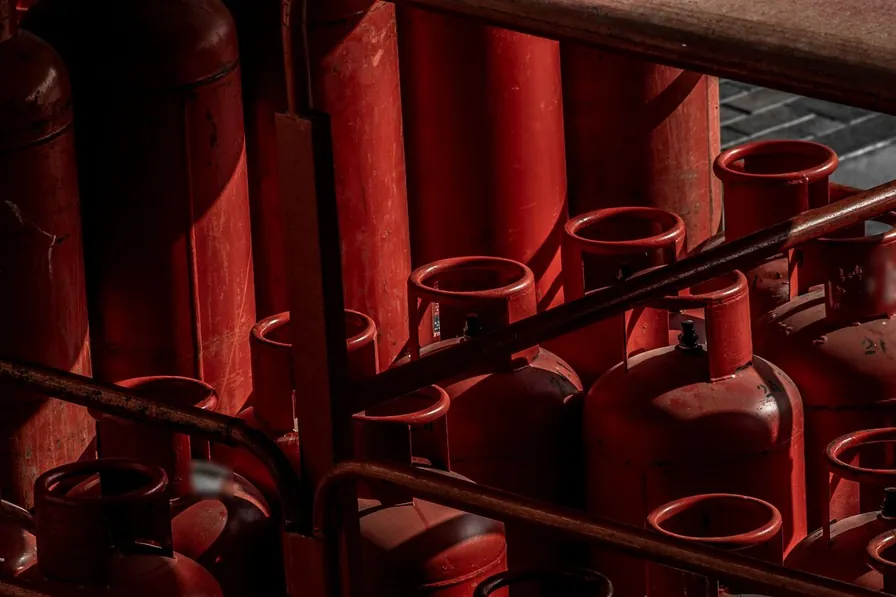
A PESO licence is a licence or approval from the Petroleum and Explosives Safety Organization (PESO), DPIIT's safety body in Nagpur. You need one to make, store, transport or import explosives, gas cylinders, pressure vessels or petroleum, above exempt quantities. Ex equipment for hazardous areas needs PESO approval. Foreign cylinder makers need approval first, and importers a Form D licence.
Published and updated
What does PESO license?
PESO licenses the making, storage, transport and import of explosives, gas cylinders, pressure vessels and petroleum, and the export of explosives. It also approves electrical equipment for hazardous areas. PESO administers the Explosives Act, 1884, the Petroleum Act, 1934 and the Inflammable Substances Act, 1952, and their rules. You apply online, through the National Single Window System, opens in a new tab (PESO's notice, opens in a new tab).
Those duties are in PESO's citizen charter, opens in a new tab (preamble and "Our functions"). Petroleum storage licences aren't covered here. For DPIIT's other work, see DPIIT's investment, procurement and licensing rules.
Each product has its own rules:
- Gas cylinders, their valves and LPG regulators: the Gas Cylinders Rules, 2016.
- Pressure vessels and ISO tank containers: the Static and Mobile Pressure Vessels (Unfired) Rules, 2016.
- Explosives: the Explosives Rules, 2008.
- Petroleum, and the approval of Ex electrical equipment for hazardous areas: the Petroleum Rules, 2002.
How does a foreign cylinder or valve maker get PESO approval?
A foreign maker of gas cylinders, or of valves that connect directly to them, applies to PESO itself, in the Schedule III format of the Gas Cylinders Rules, 2016. PESO weighs its track record, ten years of manufacturing experience and market share. The first approval runs one year and costs ₹6,50,000, and the plant is re-evaluated every five years.
1. Build to an accepted standard
Use Indian Standards or another standard the Chief Controller of Explosives accepts (PESO's gas cylinder FAQ, opens in a new tab, I.3). Valves need approval if they connect directly to a cylinder (I.2). The Bureau of Indian Standards or an accredited third-party agency may endorse the drawings (I.7).
2. Apply and name your distributor
File the Schedule III application yourself, pay online through Bharatkosh, and attach your agreement with your Indian distributor (FAQ, I.4, I.6 and I.8). PESO's guidelines, opens in a new tab also ask for product liability insurance and ten years of supply records (Part II).
3. Keep the approval valid
PESO's officers may inspect the plant, and the approval is extended on a satisfactory performance report (Gas Cylinders Rules, 2016, opens in a new tab, rule 3(3)(c) to (f)). A late extension request can be filed up to a year after expiry, with a late fee (FAQ, I.10).
| Fee for | Standard fee | Micro and small enterprises, startups | Women entrepreneurs |
|---|---|---|---|
| First approval of the plant, valid one year | ₹6,50,000 | ₹3,25,000 | ₹1,30,000 |
| Each new design after that | ₹65,000 | ₹32,500 | ₹13,000 |
| Each change to an approved design | ₹13,000 | ₹6,500 | ₹2,600 |
| Renewal of the plant's approval | ₹32,500 a year | ₹16,250 a year | ₹6,500 a year |
A women entrepreneur here is an enterprise a woman owns and controls with at least 26% of the capital (rule 2(lia)). Where two concessions apply, the lower fee wins (Schedule V, note 2). See also investing in India as a foreign company.
Which PESO licence do you need to import gas cylinders and valves?
You need an import licence in Form D, separately for cylinders and valves (PESO's gas cylinder FAQ, opens in a new tab, III.2). For use in India, only a PESO-approved foreign maker's cylinders and valves qualify, imported by the Indian distributor it filed with PESO (III.1 and III.5). The Foreign Trade (Development and Regulation) Act, 1992 also applies (Gas Cylinders Rules, 2016, opens in a new tab, rule 29(1)).
- Fees: ₹2,000 for the first 100 cylinders and ₹4,000 for 101 to 500. Above 500, it's ₹4,000 for every additional 500 or part of 500. Valves and LPG regulators: ₹1,000 per application (G.S.R. 386(E), opens in a new tab, Schedule V, A, serial 1).
- Filled cylinders above rule 44's exempt quantity also need a Form F storage licence (rule 29(4)). Empty cylinders and valves don't (PESO's guidelines, opens in a new tab, Part I).
- By land, filled cylinders, valves and regulators need the Central Government's prior sanction each time. By air, filled cylinders need the Director General of Civil Aviation's (rules 33 and 34).
PESO's own import page, opens in a new tab still cites the 2004 rules and a demand draft, but fees are now paid online (FAQ, I.6; pressure vessel FAQ, opens in a new tab, Q38). For the trade side, see India's import policy.
What changed in the gas cylinder and pressure vessel rules in 2026?
Four amendments changed the rules in 2026. Since April 28, some imports land without Customs permission. Since June 5, storage licences need no district authority NOC, and ISO tank permissions can run up to ten years. Since September 23, mobile units may refuel CNG and CBG vehicles working in mines and ports, railway locomotives and boats.
| In force from | What changed | Instrument |
|---|---|---|
| April 28, 2026 | No Customs landing permission for empty cylinders without valves, or for valves and LPG regulators from approved foreign plants with a Form D licence (rule 32(1), new proviso) | G.S.R. 315(E), opens in a new tab of April 27, 2026, rule 3 |
| June 5, 2026 | Rule 48 omitted: no district authority NOC for Form F or Form G licences | G.S.R. 447(E), opens in a new tab, rules 2 and 3 |
| June 5, 2026 | Rule 47 of the pressure vessel rules omitted: no district authority NOC for their storage licences | G.S.R. 448(E), opens in a new tab, rule 4 |
| June 5, 2026 | Form LS-2B permissions for compressed gas in ISO tank containers run up to ten years (new rule 51(4)) | G.S.R. 448(E), rule 6 |
| September 23, 2026 | Mobile units may refuel CNG and CBG vehicles in mines and ports, railway locomotives and boats (Form G, condition 22) | G.S.R. 831(E), opens in a new tab of September 21, 2026 |
G.S.R. 315(E) doesn't say whether its plant and Form D conditions cover empty cylinders. PESO's FAQ still cites rule 48 (IV.8). See our note on the Customs change.
Do imported pressure vessels and ISO tanks need approval?
Yes. No pressure vessel may be imported without the Chief Controller of Explosives' prior approval, sought in Form AS-3. You attach the maker's test and inspection report, an inspection certificate endorsed by the country of origin's inspecting agency, and drawings endorsed by a third-party agency. The fee is ₹5,000, and ISO tank permissions run up to ten years.
1. Check which rules apply
The pressure vessel rules, opens in a new tab cover metal containers for compressed gas over 1,000 liters of water capacity (rule 2(xxxvii)). Since November 2025, hydrogen, CNG, nitrogen and compressed air cylinders may count as gas cylinders up to 3,000 liters, within diameter limits (G.S.R. 839(E), opens in a new tab, rule 2).
2. Apply in Form AS-3
Attach the endorsed test and inspection papers and two copies of the endorsed design drawing (rules 4(4) and 4(5)), all filed online (rule 11A).
3. Pay the fee
₹5,000, or ₹2,500 for micro and small enterprises and startups and ₹1,000 for women entrepreneurs (G.S.R. 374(E), opens in a new tab, Schedule I, B, serial 3).
4. For an ISO tank, get a Form LS-2B permission
It now runs up to ten years (G.S.R. 448(E), rule 6), at ₹5,000 a year (Schedule I, B, serial 15).
Containers that make steam, or heat water by fire or electricity, fall outside these rules (rule 2(xxxvii)). See the Indian Boiler Regulations.
Does Ex electrical equipment need PESO approval?
Yes. Ex electrical equipment made abroad needs PESO approval before use in hazardous areas under the petroleum, gas cylinder and pressure vessel rules (PESO's Petroleum Rules FAQ, opens in a new tab, Q2). Approval goes only to the maker, or a foreign maker's Indian agent (Q4). PESO accepts an IECEx certificate, charges ₹2,000 per certificate and needn't inspect the factory (Ex SOP, opens in a new tab, Part B).
- Certificates: an IECEx certificate of conformity, test report and certified drawing, or for a maker in the European Union, an EU-type examination certificate with its quality papers (Ex SOP, Part B, item 2).
- A letter from the original maker authorizing its Indian distributor or service provider to apply, with a service agreement for spares, repairs and after-sales service (item 4).
- The approval lasts until the product standard or the design changes (Part B, note).
Who can import or work with explosives?
Only a holder of an LE-8 import licence, with premises licensed in Form LE-3, may import explosives, and only through ports the Central Government notifies. Since October 14, 2026, a research lab may make and use up to 5 kg of new explosive compositions at a time with PESO's permission. A foreign company's occupier is its director living in India.
- Imports come by air or sea. By land, you need the Central Government's prior sanction (PESO's explosives FAQ, opens in a new tab, Q51 to Q53).
- A research lab applies in Form AE-13 for a Form LE-13 permission, valid up to three years, for at most 5 kg at any one time (G.S.R. 887(E), opens in a new tab, rule 6 and Form LE-13).
- The permission doesn't cover commercial production, sale, samples for others or field trials. Those need the explosive's authorization under rule 6 of the Explosives Rules first (G.S.R. 887(E), rule 5).
What does PESO charge, and how long does it take?
PESO's fees are set in each set of rules and paid online. A foreign cylinder maker's first approval costs ₹6,50,000, a pressure vessel import ₹5,000 and an Ex certificate ₹2,000. Under the cylinder and pressure vessel rules, micro and small firms and startups pay half, and women entrepreneurs one fifth. PESO's own target for online applications is 21 days.
| Item | Fee | Source |
|---|---|---|
| Foreign maker's first approval | ₹6,50,000 | G.S.R. 386(E), opens in a new tab, Schedule V, B, serial 2 |
| Form D import licence | ₹2,000 for the first 100 cylinders | G.S.R. 386(E), Schedule V, A, serial 1 |
| Pressure vessel import | ₹5,000 per approval | G.S.R. 374(E), opens in a new tab, Schedule I, B, serial 3 |
| Ex equipment approval | ₹2,000 per certificate | PESO's Ex SOP, opens in a new tab, Part B, item 6 |
A PESO notice, on its site since May 2023, says online applications "shall be processed within time line of 21 days". PESO's citizen charter, opens in a new tab gives 2 to 3 days for simple cases, such as tanker licences for petroleum and gas, and 2 to 3 weeks for other routine approvals ("Our commitments").
The two don't agree, and both are PESO's targets, not promises. Ship only once the licence is granted: rule 29(1) bars any import without one. Licences to fill and store gas in cylinders run one to ten years (gas cylinder FAQ, opens in a new tab, IV.12).
Is PESO changing its rules?
PESO is reviewing its rules. On July 10, 2026, it invited suggestions, due by July 31, for a review of the Explosives Act, 1884 and six sets of rules, among them the gas cylinder and pressure vessel rules. We found no draft from the review as of October 29, 2026.
G.S.R. 831(E) and 887(E), made after the circular, opens in a new tab, began as drafts published before it, on June 10 and February 25, 2026.
Section 18 of the Explosives Act requires rules to be published in draft first, and each 2026 amendment's draft gave 30 days for objections. That's when a company can comment.
How IndusDesk helps with PESO approvals
We watch the authorities, tell you what each change means for your products and plans, represent you while a decision is still open, and carry the work through, with every step on record in your workspace.
Frequently asked questions
Can cylinders from a maker PESO hasn't approved be imported?
Only in the cases rule 3(5) of the Gas Cylinders Rules allows. A filler licensed in Form E and F may fill them to ship back to the country of origin or to supply a foreign-going ship at an Indian port (PESO's gas cylinder FAQ, III.6). Defense and space establishments may also import them for their own use (G.S.R. 315(E), rule 2).
Can cylinders be made to ISO or EN standards instead of Indian Standards?
Yes, if the Chief Controller of Explosives accepts the standard (PESO's gas cylinder FAQ, I.3). Imported valves must follow IS, ISO or EN codes listed in Schedule I of the 2016 rules, and be approved by the Chief Controller (III.4).
Who is the 'occupier' for a foreign company under the Explosives Rules?
A foreign company's occupier is its director who lives in India under section 149 of the Companies Act, 2013 (G.S.R. 887(E), rule 2(b)). The occupier controls and is responsible for managing the premises, and includes whoever holds the explosives (Explosives Rules, 2008, rule 2(37)).
Sources
- PESO, citizen charter (web page, read October 29, 2026): preamble, "Our functions" and "Our commitments", opens in a new tab
- PESO, Time line for disposal of online applications (notice, posted 2023; an image, read by OCR), opens in a new tab
- PESO, FAQs on approvals and licences under the Gas Cylinders Rules 2016 (FAQ-GCR-2024, posted August 2024): Part I, questions 1 to 10; Part III, questions 1 to 6; Part IV, questions 6, 8 and 12, opens in a new tab
- Gas Cylinders Rules, 2016, G.S.R. 1081(E) of November 22, 2016: rules 3, 29, 32, 33 and 34, opens in a new tab (PDF, 1.8 MB)
- Gas Cylinders (Amendment) Rules, 2025, G.S.R. 386(E) of June 9, 2025: rule 2(c) and the new Schedule V, Parts A and B, with notes 1 and 2, opens in a new tab
- Gas Cylinders (Fourth Amendment) Rules, 2025, G.S.R. 839(E) of November 12, 2025: rule 2, opens in a new tab
- PESO, Import of Cylinders and Valves (web page, read October 29, 2026), opens in a new tab
- PESO, Guidelines for issuing of licenses under Gas Cylinders Rules, 2016 (posted January 2025): Part I and Part II, documents for a foreign manufacturer, opens in a new tab
- PESO, SMPV Rules: FAQ summary (posted August 2024): Q31 and Q38, opens in a new tab
- Gas Cylinders (Amendment) Rules, 2026, G.S.R. 315(E) of April 27, 2026, Gazette of April 28, 2026: rules 2 and 3, opens in a new tab (PDF, 696 KB)
- Gas Cylinders (Second Amendment) Rules, 2026, G.S.R. 447(E) of June 5, 2026: rules 2 to 4, opens in a new tab (PDF, 726 KB)
- Static and Mobile Pressure Vessels (Unfired) (Amendment) Rules, 2026, G.S.R. 448(E) of June 5, 2026: rules 4, 6 and 8, opens in a new tab
- Gas Cylinder (Third Amendment) Rules, 2026, G.S.R. 831(E) of September 21, 2026, Gazette of September 23, 2026: preamble, rules 1 to 3, opens in a new tab
- Static and Mobile Pressure Vessels (Unfired) Rules, 2016, G.S.R. 1109(E) of December 1, 2016: rules 2(xxxvii), 4(4) and 4(5), opens in a new tab
- Static and Mobile Pressure Vessels (Unfired) (Amendment) Rules, 2025, G.S.R. 374(E) of June 5, 2025: rule 4 (new rule 11A) and Schedule I, B, serials 3 and 15, opens in a new tab
- PESO, Revised FAQs on the Petroleum Rules, 2002 (posted August 2024): Ex Electric Apparatus, Q2 and Q4, opens in a new tab
- PESO, SOP for approval of Ex-electrical apparatus installed in hazardous areas (posted July 2025): Part B, items 2, 4 and 6, and note, opens in a new tab
- PESO, Revised FAQs on the Explosives Rules, 2008 and the Ammonium Nitrate Rules, 2012 (posted August 2024): Q51 to Q53, opens in a new tab
- Explosives (Second Amendment) Rules, 2026, G.S.R. 887(E) of October 14, 2026: preamble, rules 2(b), 5 and 6, and Form LE-13, opens in a new tab (PDF, 1.4 MB)
- Explosives Rules, 2008, G.S.R. 907(E) of December 29, 2008: rule 2(37), opens in a new tab
- Explosives Act, 1884: section 18 (draft rules published before they are made), opens in a new tab
- PESO circular No. C.VIII(3)125/Cir/PESO of July 10, 2026: invitation of suggestions for a review of the Act and rules PESO administers, opens in a new tab