CRS registration: BIS Scheme II for electronics and notified goods
BIS CRS registration is the Compulsory Registration Scheme (CRS) of the Bureau of Indian Standards (BIS), its Scheme II. The factory owner has the product tested at a BIS-recognized lab, then applies with the report and a self-declaration. BIS checks the results and grants a Standard Mark licence with an R-number, without a factory assessment, for up to five years.
Published and updated
What is CRS, and which products need it?
The Compulsory Registration Scheme is BIS's licence through registration, based on the maker's self-declaration of conformity. The Amendment Regulations, 2026, opens in a new tab replaced its text, Scheme II, on February 25, 2026 (regulation 13(b)). A product needs it when a ministry's order puts it under registration, and then carries the Standard Mark with its own R-number.
| Ministry | Order | Where it stands |
|---|---|---|
| Ministry of Electronics and Information Technology (MeitY) | Electronics and IT goods order, 2021 | In force; products listed in our MeitY tracker |
| Ministry of New and Renewable Energy (MNRE) | Solar photovoltaic goods order, 2017 | Listed by BIS |
| Ministry of Chemicals and Fertilizers | Three quality control orders of 2021 and 2022 | One product each: ortho phosphoric acid, polyphosphoric acid, trimethyl phosphite |
| Ministry of Textiles | Cotton Bales (Quality Control) Order, 2023 | Rescinded on June 9, 2026 by S.O. 2956(E), opens in a new tab |
MeitY's 2021 order holds most CRS products; our MeitY guide explains it. BIS's other routes are in our guide to BIS certification.
In August 2026, BIS placed audio, smart, augmented reality (AR) and mixed reality (MR) glasses in CRS categories, with a separate licence for each product name (Reg/ 2026/G-01, opens in a new tab, paragraphs 2 and 4). Glass screen protectors for smartphones became the 66th entry of MeitY's order. BIS issued their licence guidelines on October 15, 2026 (CMD-2/16: 19348, opens in a new tab).
Who applies for CRS, and does each brand need its own registration?
The manufacturer, meaning the factory owner, applies for CRS registration. Each product needs its own application in Form I, and each brand name needs its own too, unless the brand owner is the same (Scheme II, opens in a new tab, paragraph 3(1)(c) and (d)). The licence covers only the manufacturing unit named in it (2021 BIS advisory, opens in a new tab, paragraph 4).
So a supplier's registration under its own brand doesn't cover a product sold under your brand, unless both brands have the same owner. Your brand's application carries your brand authorization letter to the manufacturing unit (BIS advisory for CRS applicants, January 15, 2025, opens in a new tab, paragraph 3.2). Making the product at another unit is misuse and may lead to cancellation (2021 advisory, paragraph 5).
A foreign maker also nominates an Indian representative in Form IV (Scheme II, paragraph 3(1)(g)). Form I offers its own office in India, the brand owner or its office, or a major importer or distributor (item 7). An importer or distributor needs the brand owner's declaration that the brand has no owner, registered user or office in India (2025 advisory, paragraph 2.4). See the Authorized Indian Representative for a BIS licence.
How does BIS CRS registration work?
BIS CRS registration runs on BIS's CRS portal in two stages. First the maker raises a test request and has a BIS-recognized lab test the product. Then it applies with the verified report, an undertaking and affidavits. BIS checks the papers and the results, without an assessment at the site, and issues the licence (Amendment Regulations, 2026, opens in a new tab, regulation 12).
1. Raise a test request.
On the CRS portal, enter the sample details and pick a BIS-recognized lab (BIS, CRS registration steps, opens in a new tab). See BIS testing labs.
2. Send the sample within 60 days.
The sample and a copy of the test request must be sent to the lab within 60 days of the request (BIS, how to submit the sample, opens in a new tab).
3. Verify the report.
Check the lab's report before you apply: its model numbers and marking labels must match the test request, and its product name the one you apply under (2025 advisory, opens in a new tab, paragraphs 7.1 to 7.3).
4. Apply within 90 days of the report.
File Form I with the verified report within 90 days of its issue (BIS, CRS registration steps, opens in a new tab). Send it with the Form II undertaking, the Form III affidavit and, for a foreign maker, the Form IV nomination (Scheme II, opens in a new tab, paragraph 3(1)).
5. Wait for BIS to decide.
BIS checks the application and the results for correctness and conformity (paragraph 3(2) to (4)).
6. Receive the licence.
It names the scope, licence number, the maker's address, brand, model numbers, validity and standard (paragraph 3(5)).
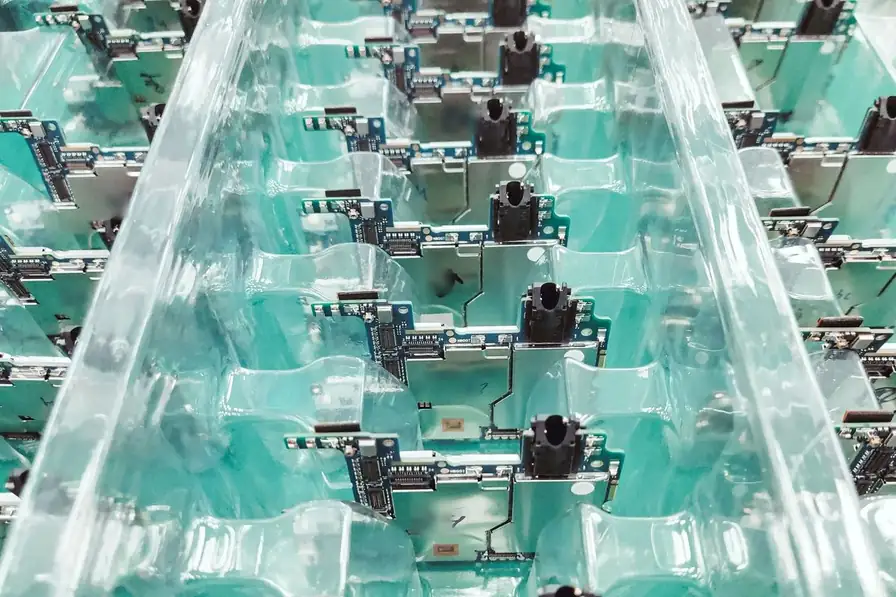
Don't put the Standard Mark on samples sent for testing: they aren't in a licence's scope yet (2025 advisory, paragraph 7.5).
How long does BIS take to grant a CRS licence?
BIS's Citizen's Charter, opens in a new tab of January 2024 sets 20 working days for the Registration Scheme (Annexure A, item 2(a)(4)). That's BIS's own time norm for its part of the work, not a promise. Lab testing comes before you apply, so it isn't inside those 20 days. No current CRS guideline we read sets its own time.
What is parallel testing under CRS?
Parallel testing is a BIS procedure that lets a maker send components and the final product to labs at the same time, instead of waiting for each component's R-number. BIS made it permanent on January 9, 2024 for every product under MeitY's 2021 order. BIS still grants the licences one after another (guideline RG: 01, opens in a new tab, paragraphs 2 and 3).
In BIS's example, a phone needs a registered cell, battery and adapter. The lab can test the battery before the cell has an R-number, quoting the cell's test report instead, and test the phone the same way. BIS processes the phone's licence only after every component is registered.
Parallel testing is voluntary. The maker undertakes to bear the whole risk, cost included, if an application fails, and not to make, supply or sell the product before registration (paragraphs 1 and 4).
A component's registration doesn't register the finished product. Each product needs its own application in Form I (Scheme II, paragraph 3(1)(c)), and components that CRS covers must carry their own R-number (RG: 01, paragraph 4(iv)).
Can one CRS test report cover several models?
No document we read sets one rule for every product. The CRS licence lists the model numbers it covers (Scheme II, paragraph 3(5)), and the number of samples follows each product's sampling guidelines (paragraph 3(1)(b) and (e)). BIS's 2025 advisory tells makers to follow the regulators' series guidelines, such as MeitY's (paragraph 7.9, opens in a new tab).
We found no current series guideline on BIS's CRS site on November 8, 2026. The glass screen protector guidelines record a range of sizes in the licence and say MeitY may set series guidelines (CMD-2/16: 19348, opens in a new tab).
To add models after grant, the licensee applies for a change in scope in Form VIII A or B, on a complete test report from a third-party lab (Scheme II, opens in a new tab, paragraph 10(1) and (2)).
How is a CRS licence renewed, and when are its fees due?
A CRS licensee applies for renewal in Form VI at least three months before the licence expires (Scheme II, opens in a new tab, paragraph 9(1)). Renewal runs for up to five more years (paragraph 8(2)). Fees are paid every year in advance, at grant, at renewal and while the licence runs, as BIS's notice of May 27, 2026, opens in a new tab confirms.
That notice says a licence is granted "for five years"; Scheme II says "for up to five years" (paragraph 8(1)). We follow the regulation.
If the annual fee and production statement miss the due date, the licence stands suspended for ninety days, and canceled if they still haven't arrived when those days end (regulation 8(11)). See BIS licence validity, renewal and annual fees.
Form VI, the renewal form, renews the licence under its existing R-number. It asks for the articles the licence covers, their quantities and the fee, not a new test report (Scheme II, Form VI).
Until May 31, 2029, micro enterprises and start-ups get 80% off the Scheme II processing fee, small enterprises 50% and medium enterprises 20%. From June 1, 2029, it's 20% for all three (paragraph 5(6)).
What must a CRS licensee keep doing?
A CRS licensee uses the Standard Mark only on the models in its licence and only at the unit the licence names. It keeps the product conforming, pays its fees each year with a production statement, and stops marking if it can't conform (2021 advisory, opens in a new tab; Scheme II, opens in a new tab, paragraphs 8(3) and 11).
- Market samples: BIS may test samples drawn from the market or in transit (paragraph 3(6)). The licensee pays for the samples and their testing (paragraph 5(8)).
- E-labels: a device with a built-in screen may show the Standard Mark electronically (Annexure-I, item (v)).
- Self-suspension: a licensee that can't keep the product conforming stops using the Mark and tells BIS, then reports restarting within seven days (paragraph 11(1) and (2)). Moving the unit to a new address also means suspending use of the Mark and telling BIS (paragraph 11(3)).
- After cancellation: the licensee or its representative stops supplying, importing and selling the product with the Mark (paragraph 12(3)).
See BIS licence suspension and cancellation for appeals, and our guide to customs in India for goods you import.
Foreign makers of goods outside CRS apply under the Foreign Manufacturers Certification Scheme instead. BIS's overview says it covers every product except the electronics and IT goods MeitY has notified (BIS, FMCS overview, opens in a new tab). See FMCS, the BIS licence for foreign manufacturers.
How IndusDesk helps with CRS registration
We watch the authorities, tell you what each change means for your products and plans, represent you while a decision is still open, and carry the work through, with every step on record in your workspace.
For CRS, we work out which order, category and standard apply, prepare Form I, the undertaking, affidavits and replies to BIS for the maker or its Indian representative to file, and track fees, renewals and notices. BIS decides, so we never promise a registration. Licences and approvals are how we carry it through, never the whole of the work.
Latest notices and insights
- Cotton bales QCO rescinded before its August 27, 2026 start (Insight, June 9, 2026)
Frequently asked questions
Does a CRS product need a factory inspection?
No. BIS grants Scheme II licences without an assessment at the site (Amendment Regulations, 2026, opens in a new tab, regulation 12). After grant, it may still test samples from the market or in transit (Scheme II, paragraph 3(6)).
How old can a CRS test report be?
You apply within 90 days of the report's issue, after verifying it on the CRS portal (BIS, CRS registration steps, opens in a new tab). The sample must be sent to the lab within 60 days of the test request.
My supplier is registered. Do I need my own registration for my brand?
Yes, unless both brands have the same owner. Scheme II needs a separate application for each brand name unless the brand name owner is the same (paragraph 3(1)(d), opens in a new tab), and the brand owner gives the factory an authorization letter (2025 advisory, opens in a new tab, paragraph 3.2).
How long is CRS registration valid?
Up to five years from grant, renewable for up to five more, under Scheme II as replaced on February 25, 2026 (paragraph 8, opens in a new tab). Pages that still say two years predate that change.
Sources
- Bureau of Indian Standards (Conformity Assessment) Amendment Regulations, 2026, F. No. BS/XI/11/01/2025-26, February 25, 2026 (Gazette of India, CG-DL-E-26022026-270512): regulations 12 and 13(b); Scheme II, paragraphs 1, 3, 5(6), 5(8), 8 to 12, Annexure-I and Form I, opens in a new tab (PDF, 1.6 MB)
- BIS, About CRS (Compulsory Registration Scheme), crsbis.in, read November 8, 2026, opens in a new tab
- BIS, CRS registration steps, crsbis.in, read November 8, 2026, opens in a new tab
- BIS, CRS: how to submit the sample, crsbis.in, read November 8, 2026, opens in a new tab
- BIS Registration Department, Revised Provisions for Licence Validity, Renewal and Annual Fee Payment under CRS, May 27, 2026, opens in a new tab (PDF, 171 KB)
- BIS, Guidelines for implementation of Parallel Testing under the Electronics and Information Technology Goods (Requirements of Compulsory Registration) Order, 2021, Registration/Guidelines RG: 01, January 9, 2024, opens in a new tab (PDF, 281 KB)
- BIS, Advisory for applicants for Grant of Licence under Compulsory Registration Scheme, January 15, 2025 (paragraphs 2.4, 3.2, 7.1 to 7.3, 7.5 and 7.9), opens in a new tab
- BIS, Advisory for licensees regarding operation of licences granted under Compulsory Registration Scheme, Registration/14:3, September 10, 2021 (paragraphs 4 and 5, and its do's and don'ts), opens in a new tab (PDF, 372 KB)
- BIS, Guidance on product categories under the Compulsory Registration Scheme (CRS), Reg/ 2026/G-01, August 13, 2026, opens in a new tab (PDF, 339 KB)
- BIS, Guidelines for grant and operation of licence through registration for glass screen protectors (IS 19348: 2025), CMD-2/16: 19348, October 15, 2026, opens in a new tab (PDF, 1.6 MB)
- Ministry of Textiles, S.O. 2956(E), June 9, 2026, rescinding the Cotton Bales (Quality Control) Order, 2023 (Gazette of India, CG-DL-E-10062026-273283), opens in a new tab (PDF, 493 KB)
- BIS, Foreign Manufacturers Certification Scheme: overview, bis.gov.in, read November 8, 2026, opens in a new tab
- BIS Citizen's Charter, version January 2024, Annexure A (time norms), opens in a new tab