The ISI mark licence: how BIS grants a Scheme I licence
An Indian maker applies for an ISI mark licence online, on Manakonline, in Form V. The Bureau of Indian Standards (BIS) then visits the factory and tests the product. Under Option 1, BIS draws samples at the visit; under Option 2, for listed products, the maker applies with third-party test reports. BIS expects 90 days and 30 days.
Published and updated
What is an ISI mark licence?
An ISI mark licence is BIS's licence to use its Standard Mark, the ISI mark, on a product under Scheme I of the Conformity Assessment Regulations, 2018. BIS grants it to a maker for a product made at its manufacturing premises, once a factory visit and testing show the product meets its Indian Standard.
The premises include any site, owned or not, that does part of the manufacturing (Scheme I, paragraph 1(1), Explanation, opens in a new tab). The licence holder stays responsible at all times for goods that carry the mark (BIS Act, 2016, opens in a new tab, section 18(1)).
Which products need the mark is set by Quality Control Orders, from ministries and departments such as the Department for Promotion of Industry and Internal Trade. See our QCO tracker and the furniture QCO and electrical appliances QCO guides. For the ISI mark beside BIS's other schemes, see BIS certification in India.
Option 1 or Option 2: which route fits?
Option 1 is the normal route, and the only one for a foreign maker: BIS visits the factory and draws samples for a third-party lab. Option 2 is open only to Indian makers of products BIS lists for it. You apply with third-party test reports, and BIS then visits and draws one verification sample.
| Route | Who may use it | Testing | BIS's expected time |
|---|---|---|---|
| Option 1 | Every foreign maker, products listed in Annexure II(B), and products not listed for Option 2 (paragraphs 3(f), 6(a)) | Samples drawn at the visit for a third-party lab; you pay for testing (paragraphs 3(c), 15(a)) | 90 days from receipt of the application (paragraph 7(a)) |
| Option 2 | Indian makers of products listed in Annexure II(C) (paragraph 4) | Your reports with the application; BIS's verification sample is covered by the marking fee (paragraph 15(b)) | 30 days from receipt of the application (paragraph 7(b)) |
| Factory testing only | Products listed in Annexure II(A), such as bulky ones (paragraph 3(d)) | BIS witnesses tests at the factory and may draw no sample | 90 days, as under Option 1 |
The table follows BIS's Guidelines for Grant of Licence under Scheme I, opens in a new tab. Products in Annexure II(B) go under Option 1 only, and a listed product can't switch options (paragraph 6(a)). For now, products starred in Annexure II(C) may still apply under either option. A maker whose licence for the product at the same premises ended over failed samples can reapply only under Option 1 (paragraph 3(b)).
Foreign makers apply under the Foreign Manufacturers Certification Scheme: see FMCS, the BIS licence for foreign manufacturers.
How do you apply for an ISI mark licence?
You apply for an ISI mark licence online only, on BIS's Manakonline portal, in Form V with a self-evaluation cum verification report. Each product, Indian Standard and factory needs its own application. Half the annual minimum marking fee goes with the application and the balance at grant. Under Option 2, your test reports go in too.
1. Find your Indian Standard and its product manual.
The standard is on Manakonline, the manual on BIS's site (Product Certification FAQ, opens in a new tab, questions 2 and 8).
2. Get your test reports, under Option 2.
Give the lab the code BIS's portal assigns you (paragraph 4(d)). See BIS testing labs.
3. File Form V on Manakonline.
Attach the self-evaluation cum verification report (paragraph 2).
4. Pay half the annual minimum marking fee.
It comes back if BIS rejects the application (paragraph 14).
5. Fix any gaps BIS raises.
You get thirty days, extendable by thirty (regulation 4(6), opens in a new tab).
6. Host the factory visit.
The inspection fee is paid in advance (paragraph 12).
7. Receive the licence.
It shows the scope, licence number, validity and Indian Standard (Scheme I, paragraph 3(5)(a)).
What does BIS check at the factory visit?
At the factory visit, BIS checks your documents, plant layout and manufacturing process, your machinery and test equipment with its calibration, and the competence of your quality control staff. The officer witnesses tests at the factory and draws samples for a third-party lab where the route needs them. The visit normally takes one day for an Indian maker.
Scheme I sets those checks (paragraph 3(2)(c), opens in a new tab). The 2026 guidelines add what BIS verifies (paragraph 5(d)):
- calibration certificates of test equipment and test certificates of raw materials, where they apply
- a declaration of any tests you subcontract, and to whom
- your own quality assurance plan, if it differs from BIS's recommended one
If a factory test fails, BIS draws no sample; you fix the problem and pay for a second visit (paragraph 5(e)(iv)). A foreign maker's visit normally lasts two days (paragraph 5(a)).
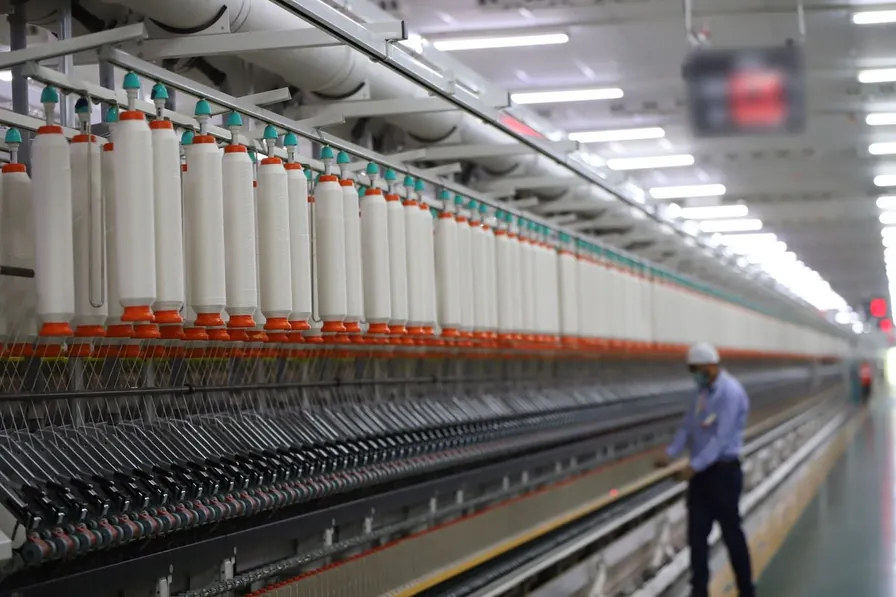
Since December 16, 2025, you don't need an in-house laboratory. A shared or cluster facility, a lab BIS recognizes or empanels, or any lab accredited to ISO/IEC 17025 will do (BIS circular CMD-I/2:4:1, opens in a new tab). Food, two-wheeler helmets, regulated cement, products under pre-dispatch or lot inspection and products certified on factory testing are left out. More in our summary of the in-house laboratory change.
Which documents does an ISI mark application need?
An ISI mark application needs Form V with the documents it lists, and a self-evaluation cum verification report in the format of Annexure I to BIS's 2026 guidelines. Under Option 2 you add the test reports. Under either option, raw material reports go in where the standard makes them mandatory. Form V itself sets the full list.
The self-evaluation report covers your plant layout and any other premises, raw materials and their suppliers, packing and marking, and any earlier BIS licence for the product. It also lists your quality control staff and the brands you'll mark (Annexure I).
Scheme I also has you list your machinery in Form I and your test equipment in Form II (paragraph 3(1)(a), opens in a new tab).
How long does an ISI mark licence take?
BIS's guidelines of February 25, 2026 expect an ISI mark licence in 90 days under Option 1 and 30 days under Option 2. Both count from the day BIS receives the application, and both assume the documents, the visit and the tests pass the first time. BIS's Citizen's Charter of January 2024 sets the same norms.
BIS's Product Certification FAQ still gives one month and four months (question 15). The 2026 guidelines and the Citizen's Charter, opens in a new tab are the current texts.
BIS's targets, not a promise
Late replies to BIS, a late sample, a failed test or unpaid fees all add time, and nobody can promise you a date.
What is an All India First licence?
An All India First licence is the first ISI mark licence for a product BIS has never licensed before. It goes under Option 1, and may go under Option 2 once BIS's website lists a third-party lab for the standard. The branch aims to grant it within 45 days of the application, unless the product's minimum testing time is longer.
BIS's officer drafts the product manual within 7 days of the factory visit (paragraph 9(iv)). Where no third-party lab tests the product, BIS may use a lab equipped for similar products (paragraph 18(a)).
Why do ISI mark applications get rejected?
BIS may reject an ISI mark application when samples aren't offered within 30 days of the application being recorded. Samples failing a second time, or missing testing arrangements or technical staff, are grounds too. Before rejecting, BIS gives at least 21 days of notice and a chance to be heard, in person or through a representative.
Paragraph 10(a) adds unpaid dues to BIS, corrective action not taken in time, tampered documents, and a major gap between the facilities you declared and what the visit finds. If only some varieties fail, BIS may restrict the scope instead (paragraph 10(a)(ii)). For appeals, see BIS licence suspension, cancellation and appeals.
How do you add a model or variety to an ISI mark licence?
To add a variety to an ISI mark licence, you apply for a change in scope in Form XIV. You send a complete third-party test report with it, or ask BIS to draw a sample. If the variety is in the same sampling group and your testing plan, machinery and test equipment haven't changed, BIS may not need a report.
- 1. Apply in Form XIV (Scheme I, paragraph 10, opens in a new tab).
- 2. Add a third-party test report, or ask BIS to draw a sample.
- 3. Receive the new scope in Form XV.
Only varieties in the scope may carry the mark (Product Certification FAQ, question 24). Labeling other than the ISI mark and licence number may be a barcode or quick response code, where the product's guidelines allow (2026 guidelines, paragraph 16(b)).
What comes after the ISI mark licence is granted?
Since February 25, 2026, an ISI mark licence is granted for up to five years and can be renewed for up to five more. You pay fees every year in advance, with a production statement. You mark your whole production of the product, and BIS inspects the factory and tests market samples.
If the annual fee and production statement miss the due date, the licence stands suspended for ninety days from that date. Pay within them, with a late fee, or it's canceled (regulation 8(11), inserted by the Amendment Regulations, 2026, opens in a new tab). See BIS licence validity, renewal and annual fees. For surveillance and failed samples, see what a BIS licensee must do and how BIS suspends a licence.
How IndusDesk helps with an ISI mark licence
We help Indian makers choose between Option 1 and Option 2, and prepare Form V, the self-evaluation report and replies to BIS for you to file. Whether BIS grants a licence, and when, is for BIS to decide.
Frequently asked questions
Does BIS wait for the test report before granting an Option 2 licence?
No. BIS grants once it sees proof that the visit sample was sent and the advance fee paid (2026 guidelines, opens in a new tab, paragraph 7(b); Scheme I, paragraph 3(1)(g)(i)). If that sample later fails, BIS suspends the licence at once (paragraph 8(a)).
Can I apply for an ISI licence myself?
Yes. Scheme I has the manufacturer apply, and grants the licence to it (paragraphs 3(1)(g) and 3(5), opens in a new tab). Only a foreign maker must nominate an authorized Indian representative (paragraph 3(1)(h)).
Do I need a separate licence for a second factory?
Yes. BIS needs a separate application for each factory, even for the same product and standard (Product Certification FAQ, question 11).
Can I use a test report older than 90 days?
Generally not. A report may be up to 90 days old when BIS receives the application; with several, the oldest may be 180. BIS's regional deputy director general may accept older ones for genuine reasons (paragraphs 4(f) and 4(g)).
Sources
- BIS, Guidelines for Grant of Licence (GoL) as per Scheme-I of Schedule-II of the BIS (Conformity Assessment) Regulations, 2018, CMD-I/2:12:1, February 25, 2026: paragraphs 1 to 10, 12, 14 to 16 and 18, and Annexures I and II, opens in a new tab (PDF, 472 KB)
- Bureau of Indian Standards (Conformity Assessment) Regulations, 2018, as published on June 4, 2018: regulation 4(6), and Schedule II, Scheme I, paragraphs 1, 3 and 10, opens in a new tab
- Bureau of Indian Standards (Conformity Assessment) Amendment Regulations, 2026, February 25, 2026 (Gazette CG-DL-E-26022026-270512): regulation 8(11) and Scheme I, paragraph 8, opens in a new tab (PDF, 1.6 MB)
- BIS circular CMD-I/2:4:1, December 16, 2025: in-house laboratory requirement for manufacturers, paragraphs 1 to 3, opens in a new tab (PDF, 75 KB)
- BIS Citizen's Charter, version January 2024: Annexure A, time norms for key services, item 2(a), opens in a new tab
- BIS, Product Certification: Frequently Asked Questions (web page, last updated February 3, 2026): questions 2, 7, 8, 10, 11, 15 and 24, cited only where no later text changed the answer, opens in a new tab
- The Bureau of Indian Standards Act, 2016 (No. 11 of 2016): section 18(1), opens in a new tab (PDF, 133 KB)